
The contracting industry has changed more in the past two decades than many expected. Customers no longer look in phone books or wait for mailed offers. They search online, compare services, and expect fast answers.
At the same time, software now runs much of the work behind the scenes. Scheduling, billing, and customer records all depend on digital tools.
This shift has made technology a core part of business growth and created new challenges. Many contractors feel pressure to keep up with updates while avoiding wasted spend.
Building the right contractor tech stack is now one of the hardest parts of running a modern service business.
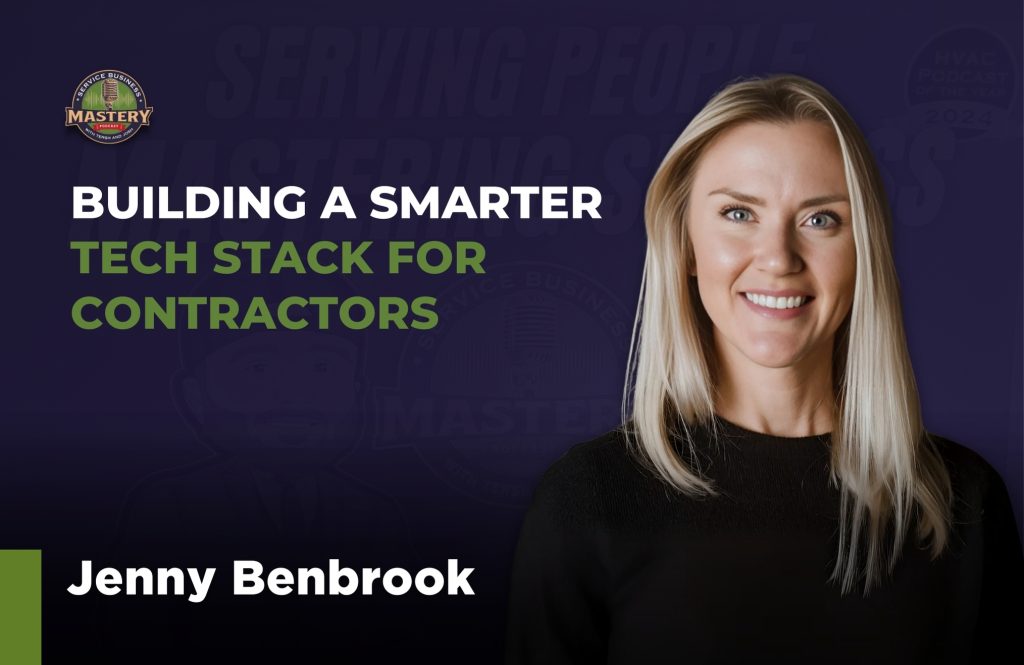
Jenny Benbrook knows this challenge well. She is the Founder & CEO of Powerhouse Consulting Group [ServiceTitan Titanium Partner + FieldEdge Partner], a certified ServiceTitan partner and the first FieldEdge consulting partner. She is also Residential HVAC Marketing Strategist at Benbrook Services, Inc.
With nearly 20 years in the trades, she has helped contractors get more from their systems through clear planning, role-based training, and strong change management.
Her team developed Contractor Resource Planning to guide businesses through audits, budgeting, and tailored playbooks that improve efficiency and profit.
Jenny also advises contractors to set aside 3 to 6 per cent of revenue for technology, treating it as a planned investment rather than an afterthought.
In this article, we will look at why contractors struggle with technology, common mistakes to avoid, and the role of planning in building a stronger system.
We will also discuss budgeting, change management, and how ongoing support can turn software into a real advantage instead of a constant frustration.
Our Sponsors:



Our Affiliates:




Why Building the Right Contractor Tech Stack Is a Challenge?
Technology keeps moving forward, and many contractors feel stuck. New tools appear so fast that businesses struggle to adjust to the systems they already use. This often creates stress, wasted money, and missed growth opportunities.
Shifts in Marketing and Operations
Not long ago, contractors relied on large phone book ads to bring in work. Today, customers expect to find and research businesses online. A website and visibility on search engines are no longer optional.
Marketing now requires technical skills, which many contractors do not have in-house. Outsourcing has become common for this reason. Operations have also changed. Paper records and old systems gave way to cloud-based platforms.
Field service and customer management software now handle scheduling, billing, and memberships. These tools save time, but must be set up and maintained correctly to work well.
Common Problems with Contractor Tech Stack Adoption
- Incomplete setups: Errors build up when systems are not set up with care.
- Staff turnover: When trained staff leave, businesses lose key knowledge and processes fall apart.
- Inaccurate data: Membership and payment records often go unchecked, which leads to unreliable numbers.
- Dependence on one expert: Relying on a single person creates risk if they leave or cannot work.
These problems make it hard to trust the data needed for planning and forecasting.
Why Contractor Resource Planning Matters
Contractor resource planning (CRP) helps close these gaps. It views the entire tech stack as one connected system. CRP focuses on clear plans, training by role, and spreading knowledge across teams. Regular reviews keep data accurate and systems running smoothly.
When contractors treat technology as part of business planning, it becomes an asset. With the right approach, technology supports growth and profit instead of causing frustration.
Who Should Manage a Contractor Tech Stack?
Business software only works well when there is a clear plan and clear responsibility. Owners often wonder if they should take full control of platforms like ServiceTitan.
They should understand what the system does and how to read the data, but managing every detail takes too much time. Their focus must remain on running the business.
The Role of Key Stakeholders
The smarter way is to assign software parts to different team members.
For example:
- Department leads manage tools linked to their teams.
- Key staff learn features that connect to their daily work.
- The owner reviews results and decisions, not every technical setting.
This approach spreads skills across the team, lowers risk, and keeps the system running smoothly. It also prevents the entire business from depending on one person.
Avoiding Overlapping Tools in a Contractor Tech Stack
Many contractors spend money on software they do not need. Some pay for several messaging platforms while their main system already offers one.
Others keep subscriptions that no one uses. This overlap leads to wasted money and confusion. A simple review before adding new tools can save time and costs.
Why Business Analysis Matters
A proper review helps build a smarter tech plan.
It should include:
- Discovery: Set goals, budget, and business needs.
- Audit: Check current tools for overlap or unused features.
- Plan: Decide which tools to keep, replace, or add.
- Implementation: Assign roles and create steps for daily use.
Building a Stronger Tech Stack
Contractor resource planning (CRP) ensures every tool has a clear purpose. It avoids random purchases and supports growth. Technology becomes easier to use with a structured plan and delivers real results.
Why Change Management Is Key to a Contractor Tech Stack?
Technology alone will not fix business problems. The real test comes when people must use it every day.
Many employees resist new systems because they fear change or do not see the benefit. This is why change management is just as important as the software itself.
Breaking Down Resistance
Old habits feel safe. Moving from paper or outdated systems can feel like too much at once. Some technicians also think skipping small steps will not matter.
However, missing details, like entering equipment information, create major issues later for both the field and the office.
To reduce resistance, it helps to:
- Explain why each step matters.
- Show how field actions affect office work and customer service.
- Walk through the impact of small tasks on the bigger process.
When people see the full picture, they are more willing to adopt change.
The Role of AI in Daily Work
AI often feels like a threat. Some worry it will replace jobs, and others think customers will reject it. In practice, AI works best as support.
It takes on repetitive tasks so staff can focus on customers and more complex calls. By explaining this clearly, teams see AI as a tool that makes their work easier, not as something to fear.
Avoiding False Efficiency in a Contractor Tech Stack
Buying software does not guarantee improvement. Tools need proper setup, training, and regular updates. Without care, features go unused and value is lost. Think of technology as a team member that requires time and attention to perform well.
Why Ongoing Support Matters
Regular check-ins, audits, and strategy sessions keep tools aligned with business needs. Specialized support adds even more value, such as help with price books or inventory. With steady guidance and clear processes, technology becomes a real asset instead of a daily frustration.
How Much Contractors Should Budget for a Tech Stack?
Technology has become a core part of running a contracting business. It drives efficiency, improves service, and supports growth.
Yet many companies treat tech costs as random expenses rather than planned investments. A better way is to set a clear budget, just as you would for marketing.
Setting a Budget for a Contractor Tech Stack
Marketing budgets often take 5 to 9 per cent of revenue because they support growth. Technology works the same way.
For small and mid-sized contractors, a good starting point is 3 to 6 per cent of total revenue. This includes all software you already use, at an extra cost.
Start by adding up your current spend. You may not be investing enough if it falls below 3 per cent. If it is closer to 15 per cent, you are likely overspending. In that case, review your tools and cut anything duplicated, unused, or offering little value.
Larger Businesses and Acquisitions
Tech planning is more complex for enterprise companies or those involved in mergers and acquisitions. Multiple systems often run at once across different locations.
This requires checking:
- How well is each platform being used?
- Which tools overlap or add no value?
- What costs are needed to bring systems together?
In many cases, experts review tech stacks during the deal process to understand both risks and opportunities.
Making Tech Work for You
The best software is the one you use fully. Whether it is ServiceTitan, FieldEdge, or another platform, success comes from proper setup, training, and adoption. Before switching to something new, weigh the costs against the potential gains.
With a clear budget and a thoughtful plan, technology becomes a true investment that supports profit and growth rather than a drain on resources.
Conclusion
Building the right contractor tech stack is not only about picking software. It ensures every tool fits a purpose, supports daily work, and contributes to growth. When businesses skip planning, they often waste money, lose data accuracy, or depend on one person for everything.
However, a clear plan changes this. Setting a budget, training staff, and spreading knowledge across teams keep systems running well.
Regular audits help remove tools you do not need and highlight features you already pay for but never use. This approach makes technology easier to manage and far more useful.
Moreover, change management is just as important as the tools themselves. People must see why each step matters and how it affects the wider process.
When employees understand the value, adoption improves, and the business gains reliable information for planning and forecasting.
That said, contractors should view technology as an investment, not a burden. A budget of 3 to 6 per cent of revenue is a good place to start. With the right structure, software shifts from being a source of stress to a driver of efficiency and profit.
In the end, technology works best when a clear plan, steady support, and a focus on growth guide it.
FAQs
What is the first step to improving a Contractor Tech Stack?
The first step is reviewing what you already use. List every tool, its cost, and who uses it. This helps you see gaps and overlaps.
How often should a Contractor Tech Stack be reviewed?
At least once a year. However, larger businesses may benefit from a review every six months to stay on track.
Can small contractors benefit from a Contractor Tech Stack?
Yes. Even simple tools for scheduling, billing, and customer records save time and reduce mistakes for small teams.
What signs show that a Contractor Tech Stack is failing?
Common signs include inaccurate data, missed payments, staff frustration, and too much reliance on one expert.
Should contractors build a tech stack in-house or use outside help?
Contractors can do both. Owners can guide the vision, but outside experts help set up and train teams.
Resources And People Mentioned:
Join the Service Business Mastery Facebook Group for more updates!
This Episode is Kindly Sponsored By:
- Sera (visit their website)
- UpFrog (visit their website)
- CallRail (visit their website)
- CompanyCam (visit their website) Visit CompanyCam and use code SBM for a free 2-week trial, 1:1 training and account setup, and 50% off your first two months!
- MarketStorm (visit their website)
- Lace (visit their website)
- priceguide (visit their website)
Affiliate Links:
- Castmagic (visit their website)
- StreamYard (visit their website)
- IfTTT- 10 Percent off! (visit their website)
- ZyraTalk (Visit their website)