Traditional methods are not enough to stay competitive in today’s fast-moving business world. New technologies, especially AI, are changing how businesses work.
AI adoption for businesses is important because it boosts productivity, improves efficiency, and keeps companies relevant. Many businesses still hesitate, unsure where to start or how to use AI effectively. This delay can leave them falling behind their competitors.
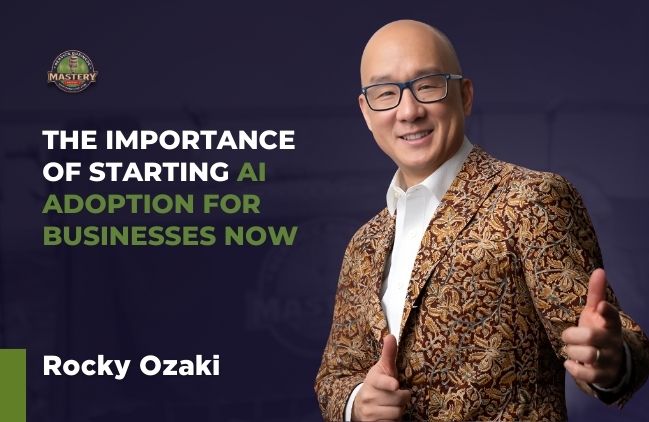
Rocky Ozaki, Founder and CEO of The NoW of Work Inc., shares key insights into this shift. He has over a decade of experience in enterprise operations and years in the startup tech sector.
Rocky blends corporate knowledge with modern, agile strategies. He helps leaders adopt AI responsibly, focusing on transparency and building trust.
In this article, we will learn why adopting AI now is crucial and offer practical steps to do it right. We will point out the risks of delaying AI adoption, lessons from past technology trends, and the rising expectations of customers and employees.
Moreover, we also discuss why clear communication and responsible AI use matter. By following these tips, businesses can improve their operations, meet market needs, and prepare for future changes.
Our Sponsors:



Our Affiliates:




Why AI Adoption for Businesses Is Essential
Businesses that do not use AI will fall behind. Technology is growing fast, and waiting too long will make it hard to catch up. Companies may only be a year behind now, but the gap will grow fast.
Starting now helps reduce the learning curve and prevents future struggles with advanced technologies.
Key Reasons for AI Adoption for Businesses
Not using AI puts businesses at a disadvantage. Here are three main reasons why adopting AI is important:
- Avoid Falling Behind Competitors: Companies that delay AI adoption risk getting outpaced. The fast-moving nature of AI means early adoption helps businesses stay ahead.
- Proven Historical Trends: People often resist new technology at first, but history shows they eventually adopt it widely. For instance, many initially dismissed Facebook as a passing trend. Yet, older generations embraced it within years to connect with loved ones, proving that skepticism fades when the value becomes clear.
- Enhanced Efficiency: AI automates routine tasks, saving time and boosting productivity. Businesses integrating AI can focus on higher-value activities and gain a competitive edge.
Market Expectations and Workforce Demands
Adopting AI is also about meeting growing expectations. From top talent to customers, stakeholders now expect businesses to use advanced technology. Modern employees look for workplaces that use tools to make tasks easier and more effective.
Skilled employees prefer companies that embrace new tools. Customers also expect businesses to stay updated and use technology that enhances their experience.
How Businesses Can Adopt AI Responsibly?
Many customers feel uneasy about AI in customer service. Companies push to use AI voice tools and chatbots, but some users still prefer speaking to a person.
This hesitation comes from a fear of losing personal interaction and trust. Businesses should recognize these concerns and address them directly.
Ensuring Responsible AI Adoption for Businesses
Businesses must adopt AI responsibly. Clear communication about how AI is used builds trust. For example, companies can notify customers when they are interacting with an AI system, ensuring they feel informed and comfortable.
Companies can engage customers early by piloting AI projects with willing participants. This approach helps businesses gather feedback and learn how to present AI in a way that customers understand and accept.
Gaining Insight from Enthusiasts
Companies can benefit from working with enthusiastic AI users. These users can share practical applications and new ideas for AI use.
Involving them in testing and refining AI solutions creates a stronger strategy and builds a foundation for broader acceptance.
Practical Steps for Effective AI Adoption for Businesses
To start using AI effectively, businesses should:
- Identify problems they want to solve.
- Prioritize key AI solutions.
- Focus on building knowledge and a disciplined approach.
Starting with simple tasks, like automating email responses or data entry, helps teams get comfortable. Regularly testing AI and learning from early adopters makes it easier to scale AI use and improve efficiency over time.
How Clear Communication Improves AI Adoption for Businesses
Clear instructions are crucial when working with AI and team members. The quality of guidance directly affects the output.
The results often fall short of expectations when directions are vague or incomplete. This applies to AI prompts as well. Detailed instructions ensure better responses, much like thorough explanations improve team performance.
Shifting Communication Habits for AI Adoption for Businesses
Communication has become shorter due to texting and quick searches. While this can be efficient, it often sacrifices clarity. To use AI effectively, people need to provide more context, such as specifying the desired tone, audience, and detailed requirements for the task.
Prompts should be clear and specific to get the desired results. This shift is a skill that many need to develop to work with AI tools effectively.
Training AI for Better Results
One useful tip for improving AI interactions is to train the system by updating its memory. Updating the AI’s knowledge about your preferences makes future prompts smoother.
For example, adding company values or specific preferences can save time on future tasks. The more context the AI has, the less prompting is needed over time.
Practical Tips for Using AI Prompts
- Learn to write clear and specific prompts.
- Start by giving context and step-by-step instructions.
- Use the AI to refine its own responses by asking, “How can this be improved?”
- Avoid starting with a blank page; use the AI as a starting point and iterate.
Why Reviewing AI Adoption Regularly Matters for Businesses
You should not rely on the first response from an AI tool. Initial outputs often need changes to meet your needs. Regular edits help ensure your response stays clear and effective.
For example, when responding to customers or writing business messages, AI can help remove emotional language and keep the tone professional. This leads to better communication and fewer misunderstandings.
Use AI to Keep a Professional Tone
AI tools can help rephrase messages to sound positive. This is helpful when dealing with customer complaints or team communication. Adjusting emotional responses with AI keeps interactions respectful and constructive.
For example, if you write a frustrated message, ask the AI to revise it for a neutral or positive tone. This helps prevent conflicts and maintains a strong business image.
Staying Prepared for New Technologies with AI Adoption
AI is just one of many fast-growing technologies. Other important examples include:
- 5G for faster communication.
- IoT for better device connections and data sharing.
- Spatial computing for more interactive experiences.
- Blockchain for secure contracts.
Learning to use AI helps businesses prepare for future tech. The skills gained from using AI, like quick data analysis and practical applications, apply to other tools. This keeps businesses competitive and ready for changes.
Boosting Efficiency and Decision-Making with AI Adoption in Businesses
AI tools save time by speeding up tasks like analyzing reports or summarizing data. With AI, business owners and teams can make decisions faster.
Analyzing profit and loss statements or marketing expenses can now take minutes. This allows leaders to focus on solutions and improve overall performance and resource use.
Conclusion
AI adoption is essential for businesses to stay competitive and grow. It improves efficiency, boosts productivity, and meets customer expectations. Early adoption gives businesses an edge over slower competitors.
Responsible use of AI builds trust when companies communicate openly and involve employees and customers. Clear instructions and training lead to better results. Businesses should start small, learn from early steps, and expand AI use gradually.
This approach reduces resistance and helps integrate new technology smoothly. Investing in AI improves decision-making, streamlines work and prepares businesses for future changes.
FAQs
What is the first step for AI adoption for businesses?
Identify key business challenges that AI can address effectively. Start with simple, manageable use cases.
Why is data quality crucial for businesses’ AI adoption?
AI depends on accurate data to work well. Clean, structured data improves AI outcomes and reliability.
How do small businesses approach AI adoption effectively?
Begin with basic AI tools that automate repetitive tasks. Gradually expand as the team gains comfort.
What are common challenges in AI adoption for businesses?
Businesses often face data issues, skill gaps, and challenges in integrating AI with existing systems.
How can businesses measure success during AI adoption?
Set clear goals linked to productivity, cost savings, or customer satisfaction. Track progress against these metrics.
What industries benefit most from AI adoption for businesses?
Industries like finance, retail, healthcare, and manufacturing gain the most through improved processes and insights.
Resources And People Mentioned:
Join the Service Business Mastery Facebook Group for more updates!
This Episode is Kindly Sponsored By:
- Sera (visit their website)
- UpFrog (visit their website)
- CallRail (visit their website)
- CompanyCam (visit their website) Visit CompanyCam and use code SBM for a free 2-week trial, 1:1 training and account setup, and 50% off your first two months!
- MarketStorm (visit their website)
- Lace (visit their website)
- priceguide (visit their website)
Affiliate Links:
- Castmagic (visit their website)
- StreamYard (visit their website)
- IfTTT- 10 Percent off! (visit their website)
- ZyraTalk (Visit their website)