
Indoor air quality (IAQ) affects our health and comfort more than many realize. As people spend more time indoors, the need for clean, breathable air becomes crucial. Yet, many buildings still struggle with pollutants, allergens, and other airborne risks. This is a challenge that the HVAC industry can tackle head-on, offering practical solutions for healthier living spaces.
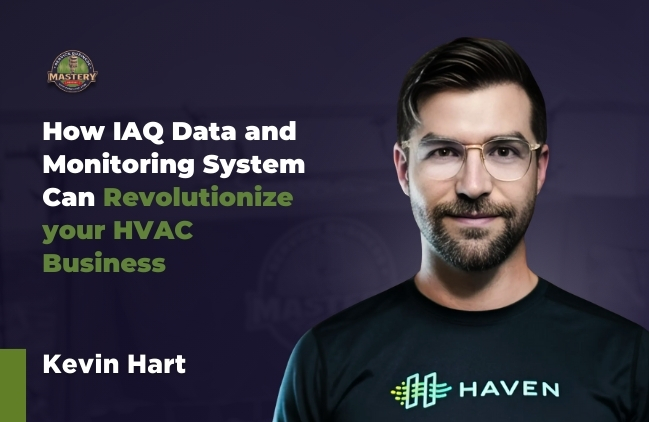
Kevin Hart, the CEO and founder of HAVEN IAQ, understands this challenge deeply. With a background as a Journeyman Redseal Electrician, Kevin has worked on various building projects. He noticed the hidden dangers of poor air quality on job sites. His journey began when he saw high levels of dangerous dust on job sites, sparking his drive to find better ways to monitor and improve indoor air.
In this article, we’ll explore Kevin’s journey from electrician to indoor air quality expert. We’ll discuss how he built HAVEN IAQ to address the hidden dangers of poor indoor air. You’ll learn about his innovative solutions that integrate with HVAC systems to create healthier spaces.
Moreover, we’ll also cover how HVAC businesses can benefit from offering IAQ services, helping them stand out, improve customer health, and increase profits.
Our Sponsors:







Our Affiliates:




How Early Experiences Shaped an Entrepreneurial Journey
Starting early in a trade can significantly shape career paths. In some high schools, students have opportunities to join specialized programs, such as those in electrical work. These programs provide hands-on experience and allow students to gain qualifications while still in school.
Kevin began his career through a high school program introducing him to the electrical trade. By graduating, he already had half of his electrician certification. After gaining full certification by age 21, he led a wiring crew handling various projects, from commercial buildings to luxury homes.
Working closely with HVAC and other trades sparked his interest in indoor air quality, especially on job sites filled with concrete dust. Realizing that invisible particles could pose serious health risks, he focused on indoor air quality.
Turning Passion for Indoor Air Quality into a Business
Kevin’s concern for indoor air quality soon turned into a business idea. His entrepreneurial spark, which began in high school through an entrepreneurship program, became his driving force. He started a business aimed at developing sensors to monitor air quality. Initially, he had limited knowledge about electronics and software development.
However, he learned quickly, eventually hiring experts in electrical engineering to help bring his idea to life. Starting with just a bank loan and a prototype, his determination led to media coverage and investor interest. One investor reached out because they struggled with respiratory issues, validating the importance of Kevin’s work.
Building and Scaling the Indoor Air Quality Business
Developing the air quality sensors was a complex process. Kevin’s team aimed to create a sensor that could monitor indoor air quality in detail. They integrated multiple sensors, embedded software, and networking capabilities.
However, they didn’t stop at sensing air quality. They evolved into a control company, building systems to monitor and manage indoor environments. This process requires learning new skills, including fundraising and negotiating with manufacturers.
Over ten years, the business grew from a simple idea into a sophisticated product line, competing in an industry dominated by giants like Honeywell.
Why Indoor Air Quality (IAQ) Solutions Matter for HVAC Businesses
Many HVAC businesses struggle to differentiate themselves in a crowded market. They often operate on thin margins, competing on price rather than value. This approach can result in a race to the bottom, with customers viewing HVAC services as interchangeable.
However, businesses that embrace indoor air quality (IAQ) solutions can set themselves apart and command higher margins.
The Benefits of Indoor Air Quality for HVAC Businesses
- Establishes Expertise: By offering IAQ services, HVAC professionals position themselves as experts rather than repair technicians. They gain the trust of homeowners by demonstrating a deeper understanding of the entire system, including factors like ductwork, airflow, and humidity control. This perception helps them stand out in the market.
- Improves Customer Health: Customers often don’t realize the impact of poor indoor air quality on their health. HVAC businesses that educate clients about IAQ can highlight how proper air quality management can reduce health risks, such as mold growth and high humidity levels.
- Increases Profit Margins: Focusing on IAQ allows HVAC companies to offer more comprehensive services. Going beyond basic repairs, they can provide solutions that address the overall health and comfort of the home. This approach justifies higher pricing, as customers are willing to pay more for enhanced services.
Misconceptions About Indoor Air Quality and Mold
Many contractors hesitate to promote IAQ services due to fears of being associated with mold remediation. However, IAQ services primarily focus on improving air quality through proper equipment sizing, humidity control, and ventilation.
HVAC businesses can clarify their role by building relationships with mold remediation companies. They can refer clients when necessary while maintaining their focus on preventative measures.
Educating Homeowners
To stand out, HVAC professionals must educate homeowners about IAQ’s importance. Instead of merely focusing on equipment size, they should discuss how humidity control and proper airflow impact comfort and health. By doing so, they can differentiate themselves from competitors and offer more holistic solutions.
How IAQ Solutions Work
Effective IAQ solutions involve measuring and managing various indoor air factors:
- Chemical Levels: Sensors detect harmful chemicals in the air.
- Particle Levels: Monitoring for particles like dust and allergens.
- Moisture Levels: Controlling humidity to prevent mold growth.
- Airflow: Ensuring proper air circulation to dilute pollutants.
These sensors and monitoring systems provide data to both homeowners and professionals. This data helps diagnose issues and automate solutions, such as adjusting ventilation or closing dampers during external air quality events.
This approach ensures optimal indoor conditions, improving comfort and health for occupants.
By incorporating IAQ services, HVAC businesses can enhance their offerings, establish themselves as experts, and create a more sustainable business model.
How Real-Time Data Improves Indoor Air Quality in HVAC Services
Real-time data and monitoring systems enhance the effectiveness of HVAC services by providing clear insights into the operation of heating and cooling systems.
Traditional HVAC services often rely on customer feedback and occasional site visits, making it difficult to diagnose recurring issues accurately. Continuous monitoring offers a more proactive approach, enabling contractors to identify and address problems before they escalate.
Benefits of Real-Time Monitoring
- Accurate Diagnosis: With real-time data, HVAC professionals can verify system performance and pinpoint issues like airflow problems or temperature inconsistencies. This accuracy helps address the root cause rather than relying on customer feedback-based guesswork.
- Reduced Service Calls: Continuous monitoring prevents unnecessary service calls. Contractors can view system performance remotely and adjust settings as needed, saving time and reducing operational costs.
- Proactive Maintenance: The system can send proactive alerts based on specific thresholds, such as high humidity or airflow issues. This feature enables HVAC businesses to offer preemptive maintenance services, enhancing customer satisfaction and building loyalty.
Enhancing Customer Trust
Data-driven insights allow HVAC professionals to provide transparent and credible information to customers. For instance, in cases where customers deny actions that lead to system issues, contractors can present data showing the exact problem.
This transparency helps resolve disputes and establishes the contractor as a knowledgeable and trustworthy service provider.
Automation and AI Integration
Modern HVAC monitoring systems integrate automation and AI for more efficient service delivery:
- Automated Alerts: These systems can trigger alerts for conditions like high humidity or system malfunctions, allowing contractors to address issues promptly.
- If-Then Logic: HVAC professionals can set up automated responses to specific conditions, such as activating ventilation when chemical levels rise.
- Data-Driven Campaigns: Businesses can use data to initiate targeted customer education campaigns, informing homeowners about issues like high humidity and the benefits of solutions like whole-home dehumidifiers.
Remote Management and Integration
Real-time data also supports remote management. Contractors can access data through dashboards, allowing them to adjust system settings without a site visit. Integrating this data with field service management platforms can further streamline service processes, automatically triggering maintenance calls or follow-up actions.
By leveraging real-time monitoring and data analysis, HVAC businesses can improve service quality, reduce costs, and build stronger customer relationships.
How to Monitor and Manage Indoor Air Quality in Low Humidity HVAC Systems
Humidity plays a crucial role in maintaining indoor comfort and air quality. In certain regions, particularly dry areas like Utah or parts of Canada, humidity levels can drop too low, especially during winter. Monitoring humidity and managing it with a humidifier is essential to avoid issues related to overly dry air.
Why Is Low Humidity a Problem?
When indoor humidity falls below optimal levels, it can lead to various discomforts and health issues, including:
- Dry skin and respiratory irritation
- Increased static electricity
- Potential damage to wood furniture or flooring
- Higher susceptibility to airborne viruses
Maintaining proper humidity levels can improve comfort and reduce these risks.
Monitoring Humidity with Real-Time Alerts
Modern HVAC systems can include humidity sensors that track indoor levels in real time. These sensors trigger alerts when humidity drops below a threshold, ensuring contractors or homeowners know the issue.
For example, if the system detects low humidity over an extended period, it will notify the contractor, who can advise the homeowner on activating a humidifier or adjusting the system to resolve the problem.
Ensuring Humidifier Efficiency
To maintain proper humidity, the HVAC system must integrate with the humidifier efficiently. This includes interlocking the air handler with the humidifier to ensure air moves through the system properly, and the air temperature is warm enough for effective humidification.
Common humidifier issues include improper wiring, missing connections, or incorrect setup, which can prevent the unit from functioning as intended.
Monitoring humidity levels and ensuring the proper functioning of humidifiers in dry regions is essential for maintaining a comfortable and healthy indoor environment. Contractors should consider integrating these systems into their services to provide a complete solution for indoor air quality.
Conclusion:
To summarize, Indoor air quality plays a crucial role in the success of HVAC businesses. By incorporating IAQ solutions, businesses can differentiate themselves, improve customer health, and increase profit margins.
Offering these services positions HVAC professionals as experts, allowing them to provide more comprehensive solutions beyond basic repairs. Real-time monitoring and data-driven approaches enhance service quality, while proactive maintenance builds customer trust.
Ultimately, focusing on indoor air quality helps create a more sustainable and profitable business model, benefiting both contractors and homeowners alike.
FAQs
What is Indoor Air Quality?
Indoor Air Quality (IAQ) refers to the air quality within and around buildings, especially concerning the health and comfort of occupants.
Why is Indoor Air Quality important?
Poor IAQ can lead to health problems like allergies, asthma, and respiratory issues. Good IAQ helps maintain a healthy indoor environment.
What are common indoor air pollutants?
Common pollutants include dust, mold, pollen, pet dander, volatile organic compounds (VOCs), and chemical fumes from cleaning products.
How can I test my home’s Indoor Air Quality?
You can use at-home test kits or hire a professional to conduct an IAQ assessment. Monitoring devices can also provide ongoing IAQ data.
What are the health effects of poor Indoor Air Quality?
Poor IAQ can cause symptoms like headaches, dizziness, fatigue, allergies, and long-term issues like respiratory diseases and heart problems.
What role do HVAC systems play in Indoor Air Quality?
HVAC systems can filter out pollutants and regulate temperature and humidity. Regular maintenance is essential for optimal IAQ.
Resources And People Mentioned:
Join the Service Business Mastery Facebook Group for more updates!
This Episode is Kindly Sponsored By:
- Sera (visit their website)
- UpFrog (visit their website)
- CallRail (visit their website)
- CompanyCam (visit their website) Visit CompanyCam and use code SBM for a free 2-week trial, 1:1 training and account setup, and 50% off your first two months!
- MarketStorm (visit their website)
- Lace (visit their website)
- priceguide (visit their website)
Affiliate Links:
- Castmagic (visit their website)
- StreamYard (visit their website)
- IfTTT- 10 Percent off! (visit their website)
- ZyraTalk (Visit their website)