
Introduction: Electrification Is Rising, But Gas Is Not Going Away
Electrification is one of the biggest forces reshaping the HVAC industry.
States are pushing heat pump adoption. Rebates are expanding. Emissions reporting is becoming more visible. Commercial property owners are being asked to think differently about energy.
But here is the reality contractors are facing in the field:
Cold climates still demand capacity.
Utility costs vary by region.
Electrical infrastructure is not always ready.
That is where dual fuel heat pumps are stepping in.
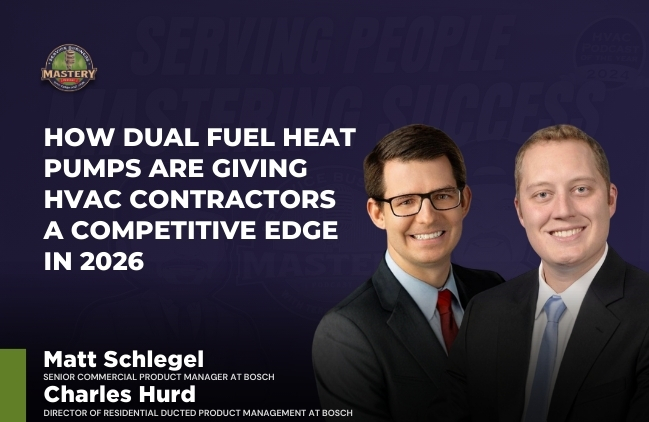
In this episode of the Service Business Mastery Podcast, Tersh Blissett sat down with Charles Hurd and Matt Schlegel, from Bosch, to unpack how dual fuel heat pumps are solving real-world installation and operating challenges for both residential and commercial HVAC contractors .
The result is not just a product discussion. It is a strategic shift contractors need to understand heading into 2026.
What Is a Dual Fuel Heat Pump?
A dual fuel heat pump combines:
- An electric heat pump system
- A gas furnace for supplemental or primary heating
Instead of relying solely on electric strip heat when temperatures drop, the system automatically switches between heat pump operation and gas heating based on outdoor temperature and programmed changeover points .
This gives contractors flexibility that straight heat pump systems cannot always deliver.
Why Dual Fuel Heat Pumps Are Gaining Momentum
1. Electrification Incentives Are Driving Demand
There is strong appetite for electrification, especially in northern states and Canada where rebate dollars can be significant .
Some rebate programs even apply to commercial tonnage, making dual fuel heat pumps viable for 6.5 to 25 ton rooftop applications .
For contractors, that means:
- Access to incentive-backed projects
- Easier conversations around emissions reduction
- A pathway into electrification without going all-electric
2. Cold Climate Limitations Still Exist
Traditional heat pumps lose capacity below 25 to 30 degrees. Electric strip heat is expensive to operate.
Dual fuel systems solve that gap by bringing on gas heat when outdoor temperatures fall below a set threshold .
This is especially valuable in markets like:
- Oklahoma
- Midwest states
- Northern US
- Canada
Instead of overbuilding electrical infrastructure, contractors can leverage existing gas lines and improve performance without full system redesign.
3. Electrical Infrastructure Is a Real Barrier
One of the most practical insights from the episode was around electrical upgrades.
Many commercial properties cannot simply move from gas heat to full electric heat because doing so may require:
- Upsizing electrical service
- Rewiring buildings
- Utility coordination
That becomes expensive fast.
Dual fuel heat pumps reduce that barrier. If gas already exists onsite, contractors can integrate heat pump technology while avoiding major electrical upgrades .
That makes the sales conversation much easier.
The Power of Adjustable Changeover Points
One of the strongest differentiators discussed was the adjustable changeover temperature.
The system can be programmed to determine at what outdoor temperature it switches from heat pump operation to furnace operation .
This allows contractors and building owners to prioritize:
- Utility cost savings
- Comfort
- Emissions reduction
For example:
If a building owner wants maximum efficiency and lower emissions, the changeover point can be set lower.
If comfort is the priority, especially in executive spaces or high-visibility retail environments, the changeover can be set higher.
This level of flexibility creates powerful selling opportunities.
Using Operating Cost Calculators to Close More Jobs
A major takeaway from the episode was the value of cost comparison tools.
By entering:
- Tonnage
- Location
- Gas cost
- Electric cost
- Emissions data
Contractors can generate estimated annual operating costs for:
- AC with gas heat
- Heat pump with electric strip heat
- Dual fuel heat pump
This transforms the sales process from opinion to data.
Instead of arguing about system types, you show:
- Projected utility savings
- Emissions differences
- Long-term operating impact
In 2026, that data-driven conversation wins.
Commercial Applications: A Growing Opportunity
Dual fuel heat pumps are no longer just residential.
The episode highlighted commercial systems from 6.5 to 25 tons with future development in simultaneous heating modes .
Simultaneous heating allows:
- Heat pump operation to continue
- Gas heat to supplement gradually
- Smoother transition during temperature drops
This prevents abrupt shifts and maintains more stable comfort in commercial spaces.
For shopping centers, schools, and national accounts, this flexibility is significant.
Comfort vs Cost: How to Navigate the Conversation
Tersh raised an important point.
In commercial real estate, landlords may prioritize operating cost over comfort.
So how do you position dual fuel heat pumps?
Start by identifying what the owner values:
If they care about emissions, show reduction data.
If they care about operating cost, show savings.
If they care about comfort for high-value tenants, emphasize gas heating performance.
Dual fuel heat pumps give contractors options rather than forcing a single narrative.
Refrigerant Transitions and Product Stability in 2026
The conversation also touched on refrigerant transitions and the A2L changeover.
Equipment shortages during COVID and refrigerant supply challenges weakened brand loyalty across the industry .
However, stability is expected to return as manufacturers normalize production and refrigerant availability improves.
For contractors, this means:
- Better forecasting
- More reliable product access
- Stronger dealer partnerships
As stability returns, performance and features will once again drive purchasing decisions.
Dual fuel heat pumps sit squarely in that performance category.
Controls, Compliance, and the Future of HVAC
Another emerging factor is Controls Verification Protocol compliance.
Communicating systems that can track load lines and respond precisely to space temperature are becoming more important .
While some top-tier systems may require proprietary communicating thermostats, other inverter platforms still allow 24-volt compatibility with smart thermostats such as Nest or Honeywell .
For contractors, understanding:
- Which systems require communicating controls
- Which allow flexibility
- How demand response compliance works
Will become increasingly important in 2026 and beyond.
AI and Predictive Maintenance: The Next Layer
The episode also explored how AI may shape service in the near future.
Rather than flashy marketing buzzwords, the focus was on practical contractor value.
Future developments may include:
- AI-assisted troubleshooting through mobile apps
- Predictive maintenance alerts
- Performance degradation warnings
- Parts lookup assistance
The goal is not novelty. The goal is reducing callbacks and supporting junior technicians in the field .
For HVAC contractors, that translates into:
- Faster service calls
- Fewer repeat visits
- Better technician confidence
What This Means for HVAC Contractors in 2026
Dual fuel heat pumps are not just a temporary bridge.
They represent a long-term solution that:
- Supports electrification goals
- Preserves gas performance where needed
- Reduces electrical infrastructure costs
- Improves comfort in cold climates
- Opens commercial rebate opportunities
As full cold-climate heat pumps evolve, dual fuel systems will likely remain a lower-cost alternative that balances efficiency with practicality .
For contractors, that balance is where profit lives.
Conclusion: Flexibility Wins
The HVAC market is not moving in a single direction.
Some customers want electrification.
Some want cost control.
Some want comfort above all else.
Dual fuel heat pumps give HVAC contractors the flexibility to serve all three.
In 2026, the contractors who win will not be those pushing one technology.
They will be the ones who understand when and how to apply the right system for the right client.
Dual fuel heat pumps are becoming one of the most strategic tools in that toolbox.
FAQs
What is a dual fuel heat pump?
A dual fuel heat pump combines an electric heat pump with a gas furnace to switch between energy sources based on outdoor temperature and efficiency needs.
Are dual fuel heat pumps good for cold climates?
Yes. They provide heat pump efficiency in mild weather and gas heating performance when temperatures drop below heat pump capacity limits.
Do dual fuel heat pumps qualify for rebates?
In many regions, including northern US states and Canada, dual fuel systems may qualify for electrification rebates .
Do dual fuel systems require electrical upgrades?
Often no. If gas is already available onsite, dual fuel can reduce the need for major electrical service upgrades .
Can dual fuel systems work with smart thermostats?
Some inverter systems allow compatibility with 24-volt smart thermostats, while others may require communicating controls depending on compliance requirements .