
Predictive analytics in business is reshaping how companies make decisions and plan for the future. This technology is particularly impactful in hiring, where it helps companies forecast employee success and improve retention.
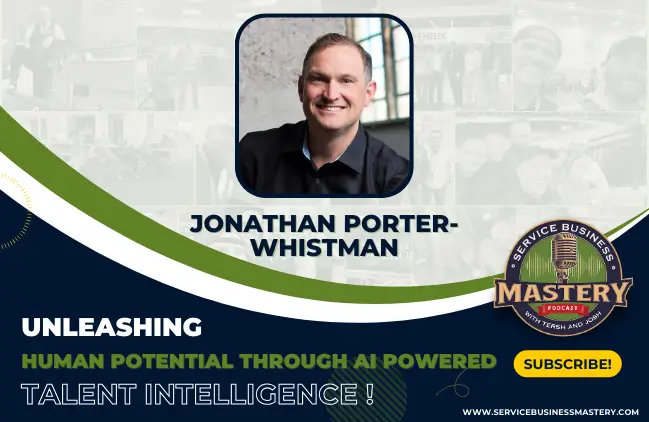
Jonathan Porter, a leader in sales strategies and hiring practices, has been instrumental in advancing these technologies. As CEO of WhoHire and Founding Partner of The Sales Boss, Porter has created systems that blend AI with effective hiring processes.
In this article, based on Jonathan Porter’s insights, we will explore how predictive analytics in business transforms hiring strategies across various industries. We will discuss how this approach streamlines the recruitment process and aligns employee capabilities with business goals.
Moreover, we’ll look at its applications in large and smaller corporations, showing its wide-reaching benefits. Also, you’ll learn how predictive analytics can be a game-changer for your business.
Our Sponsors:







Our Affiliates:




Leveraging Predictive Analytics in Business Hiring Strategies
Jonathan Porter has developed an extensive entrepreneurial background, building and selling several companies and authoring “The Sales Boss,” a guide on constructing high-performing sales teams.
His interest in maximizing human potential led him to explore advanced hiring practices, particularly using predictive analytics in recruitment.
Harnessing Data to Improve Hiring Decisions
Porter highlights the inefficiency of traditional hiring assessments focusing solely on personality traits like introversion or extroversion. Instead, he emphasizes the importance of performance-oriented metrics.
Collaborating with data scientist Regina, who specialized in organizational psychology, they shifted the focus towards predicting actual job performance using machine learning algorithms.
This approach evaluates traits such as:
- Grit and determination
- Trust response and sincerity
- Predicted job performance metrics (e.g., sales numbers, customer service ratings)
This data-driven strategy allows businesses to predict how long employees will stay and their performance level, streamlining the hiring process and reducing turnover.
Application Across Industries
Initially tailored for high-scale enterprises like Mercedes-Benz, the model’s success led to adaptations for smaller businesses, particularly in the trades. By assessing current employees and correlating their traits with performance data, they could predict outcomes for new hires with notable accuracy.
This method has been especially transformative in sectors with high employee turnover, such as home services, providing smaller companies access to powerful analytics previously reserved for larger corporations.
Impact on Business Efficiency
The predictive model forecasts sales performance and anticipates customer service outcomes, which is crucial for roles like garage door technicians. By understanding the potential return on investment before hiring, businesses can significantly improve their recruitment efficacy, saving time and reducing the costs associated with high turnover.
By integrating advanced data analytics into hiring practices, companies can align their staffing more closely with strategic business goals, leading to more stable and productive work environments.
Enhancing Employee Retention with Predictive Analytics in Business
Adopting artificial intelligence (AI) in hiring processes has revolutionized how businesses predict employee retention and job performance. AI utilizes pattern recognition to identify potential successes and challenges in employee performance, ultimately influencing hiring decisions and organizational growth.
AI and Predictive Analytics in Business for Hiring
AI simplifies complex patterns and predicts outcomes by analyzing extensive data sets. This technology enables companies to evaluate whether candidates possess the inherent qualities needed to excel in specific roles.
For instance, not everyone can perform at elite levels in every field, akin to the differences in musical talent among individuals. AI in hiring works similarly by identifying innate abilities and predicting job suitability and retention, thereby minimizing the risks associated with new hires.
Creating Performance Blueprints
To tailor AI effectively for hiring, businesses must develop detailed performance blueprints for roles with high turnover rates, such as technicians or customer service representatives.
This involves:
- Conducting comprehensive psychographic analyses to understand the traits of current successful employees.
- Collecting performance data and management assessments to identify key success indicators.
- Utilizing machine learning to correlate these traits with job performance, creating a reliable predictive model.
Based on their psychographic profiles, these blueprints help predict how new hires will perform and how long they are likely to stay.
Practical Applications and Results
Companies like Mercedes Benz have utilized these predictive models to forecast car sales performance, achieving accuracy within 15-20%. The model’s precision improves as more data is integrated, demonstrating its scalability and adaptability across different industries and company sizes.
The Role of Training and Organizational Culture
While predictive analytics in business can significantly enhance hiring accuracy, the onboarding and training processes remain crucial. An effective hiring strategy must be complemented by a supportive culture and thorough training programs to ensure that employees match the job on paper and engage and thrive in their roles.
Comparison with Traditional Assessment Tools
Traditional personality assessments, like Myers-Briggs or DISC, provide insights into a candidate’s personality traits but lack the predictive power of AI-driven tools, which assess a broader range of job-specific traits and potential for high performance.
While personality assessments can help determine team dynamics, they fall short in predicting job performance and long-term success.
Integrating Advanced Assessments in Hiring Processes
While traditional assessments like DISC and Myers-Briggs provide insights into personality traits, they often lack predictive accuracy regarding job performance. Advanced hiring tools incorporate these personality measures but prioritize data-driven insights over subjective judgments.
This approach allows for a more nuanced understanding of managing and leading individuals effectively rather than solely predicting job performance based on personality types.
The Role of Data in Modern Hiring Practices
Modern hiring tools utilize vast data to challenge and refine traditional beliefs about what traits predict job success. For instance, attributes like grit, which are often believed to predict performance, may show no correlation when analyzed through advanced data models.
These tools help identify which characteristics influence performance, sometimes leading to surprising insights contradicting common assumptions.
Improving Hiring Efficiency with Automation
Automated systems streamline hiring by managing job postings, filtering candidates, and facilitating initial interactions through user-friendly platforms.
These systems can:
- Automatically post job ads and manage responses.
- Initiate preliminary assessments and interactions via text or video, saving time for both employers and candidates.
- Filter candidates based on predefined criteria, ensuring that only the most suitable are considered for further evaluation.
This automation simplifies administrative tasks and enhances the candidate experience by providing timely feedback and interaction.
Accuracy and Integrity of Assessments
To maintain the integrity of assessments, advanced systems incorporate technology to detect inconsistencies in responses, ensuring that candidates cannot easily manipulate results.
These systems analyze response patterns and timings to verify the authenticity of each candidate’s answers. If discrepancies are detected, the system can prompt a re-assessment to ensure accuracy.
Customizable Assessment Frameworks
These advanced hiring tools offer customizable assessment frameworks aligning with organizational needs. Companies can set parameters prioritizing certain traits and experiences depending on immediate needs or long-term goals.
This flexibility allows businesses to adapt their hiring strategies quickly, optimizing operational needs and cultural fit.
Utilizing Predictive Analytics in Business for Effective Team Analysis and Development
Companies increasingly recognize the value of assessing their current teams, not just new hires. This practice allows them to understand existing dynamics and capabilities, ensuring that team members are in roles where they can thrive.
Such assessments are crucial for laying out the landscape of an organization’s talent pool and identifying areas for development or realignment. The application of predictive analytics in business extends beyond hiring. It includes long-term planning where the potential for future roles and career paths within the company are considered.
This approach helps businesses in strategic workforce planning, ensuring they prepare employees for their current roles and future opportunities.
Integration of Predictive Analytics in Business Systems
Integrating predictive analytics with core business systems like CRM or ERP can provide ongoing insights into employee performance. This integration allows for a continuous feedback loop where the initial predictions about an employee’s performance are continually updated and refined based on actual performance data.
Benefits of Advanced Analytical Tools
Advanced analytical tools offer several benefits that significantly surpass traditional assessment methods:
- Efficiency in Recruitment: They streamline the recruitment process by automating initial screenings and prioritizing candidates who meet the desired criteria, saving significant time.
- Enhanced Predictive Accuracy: By using comprehensive data analysis, these tools can more accurately predict how well a candidate will perform in a role and fit within the company culture.
- Strategic Development: By identifying how an individual fits a current role and their potential for future roles, companies can better plan for succession and employee growth.
Ethical Considerations and Bias Mitigation
While advanced assessments bring precision to hiring and team analysis, they also raise ethical considerations, particularly bias. It is crucial to recognize that no assessment is entirely bias-free, but the goal is to minimize bias as much as possible.
These systems include safeguards to ensure fairness, such as algorithms that detect and adjust for potential biases in testing responses.
Conclusion:
To wrap up, predictive analytics in business is transforming how companies hire, making the process more efficient and effective. This approach allows businesses to predict how well a candidate will perform, leading to better hiring decisions and reduced turnover.
Companies of all sizes benefit from this technology, which helps them save time and money by predicting job performance before hiring.
This shift to data-driven hiring is not just about filling jobs quickly. It’s about building a stable, productive workforce that aligns with business goals. As predictive analytics becomes more integrated into hiring practices, its impact grows, offering businesses a significant advantage in a competitive market.
Overall, predictive analytics is crucial for any business looking to improve hiring practices and boost overall efficiency. Its ability to forecast employee success is reshaping the future of recruitment.
FAQs
How can predictive analytics in business identify skills gaps in teams?
Predictive analytics compares current workforce skills with future needs to spot gaps and guide training.
How does predictive analytics in business support diversity in hiring?
It removes biases by focusing on performance metrics rather than demographic factors, promoting diversity.
Can predictive analytics in business predict long-term employee engagement?
Yes, it analyzes behavior and feedback to forecast engagement and satisfaction, aiding retention.
How does predictive analytics in business work with other HR tools?
It integrates with HR systems like ATS and HRMS to improve data-driven hiring decisions.
What privacy concerns arise with predictive analytics in business hiring?
Using personal data raises privacy issues. Companies must follow data protection laws like GDPR.
Resources And People Mentioned:
Join the Service Business Mastery Facebook Group for more updates!
This Episode is Kindly Sponsored By:
- Sera (visit their website)
- UpFrog (visit their website)
- CallRail (visit their website)
- CompanyCam (visit their website) Visit CompanyCam and use code SBM for a free 2-week trial, 1:1 training and account setup, and 50% off your first two months!
- MarketStorm (visit their website)
- Lace (visit their website)
- priceguide (visit their website)
Affiliate Links:
- Castmagic (visit their website)
- StreamYard (visit their website)
- IfTTT- 10 Percent off! (visit their website)
- ZyraTalk (Visit their website)